
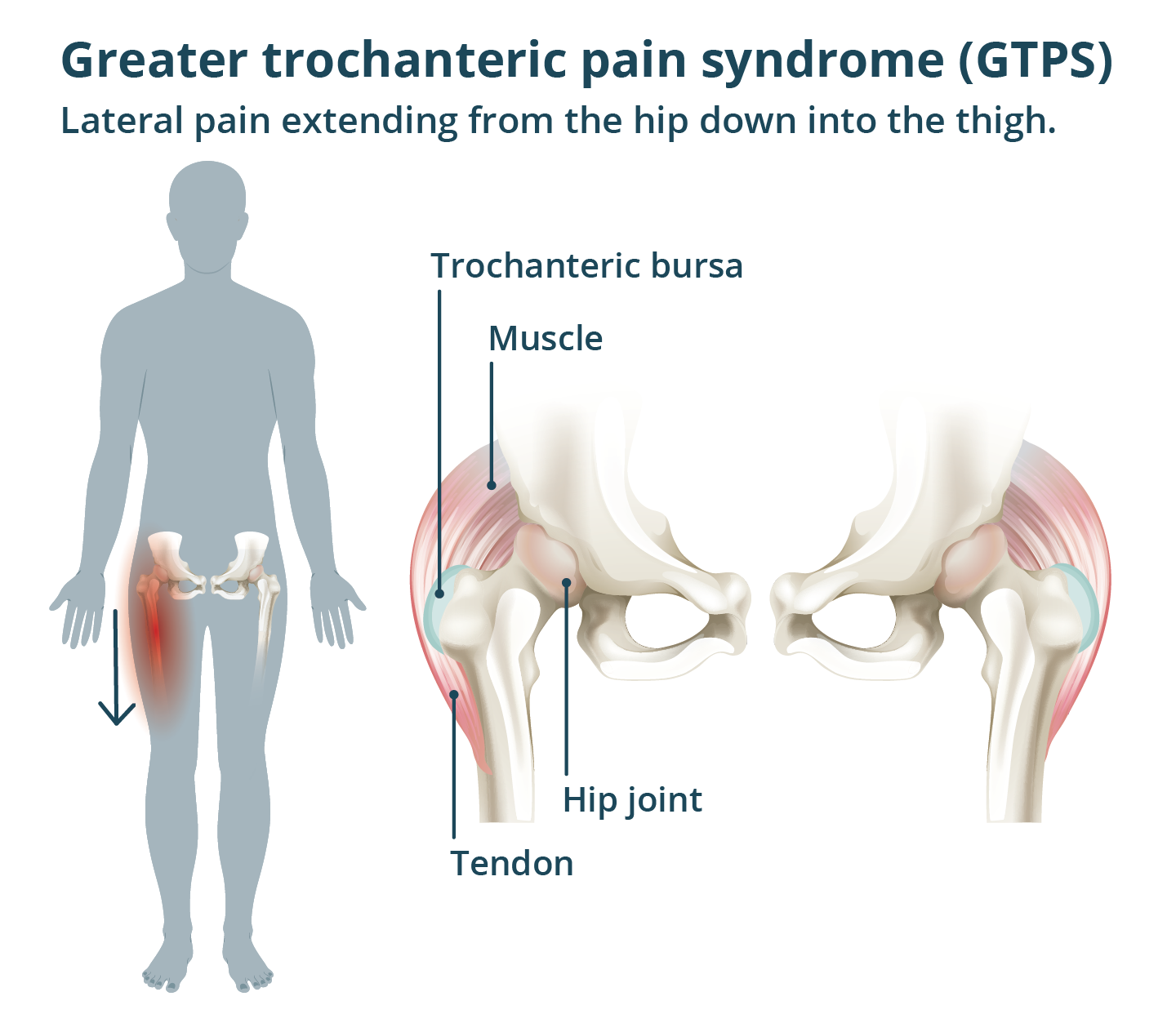
Greater Trochanteric Pain Syndrome (GTPS)
Greater Trochanteric Pain Syndrome (GTPS) is a common cause of ongoing outer hip pain that can make everyday activities like walking, standing, or even sleeping on your side uncomfortable. Often misunderstood as simple hip bursitis, GTPS actually involves irritation or overload of the structures around the hip, particularly the gluteal tendons. Understanding what GTPS is and why it occurs is the first step towards effective treatment and long-term pain relief.
What is Greater Trochanteric Pain Syndrome?
GTPS is a clinical diagnosis of lateral hip pain, specifically at the greater trochanter, a large bony prominence on the femur bone at the hip joint. The greater trochanter is a crucial insertion site for key hip muscles, including the gluteus Medius and Minimus, which act as levers to enable contraction and control and move the hip. It is surrounded by a bursa, a fluid-filled sac that cushions and reduces friction between tendons and bones during movement; this bursa can become inflamed with repetitive movement.
GTPS is not only a term for hip bursitis (inflammation of the bursa) but is more commonly associated with gluteal tendon tears or tendinopathy, indicating underlying weakness or sudden overuse of these muscles.
The signs of GTPS?
-
Pain sleeping on the same side of the hip
-
Walking with a limp or pain
-
Pain with prolonged standing
-
Pain standing up from a low chair
-
Pain crossing your legs
What causes GTPS?
-
Overload or wear-and-tear of the gluteus Medius or Minimus (tendinopathy) which may have been from a sudden increase in load
-
Loaded activities including: walking, running, gym or going up/down stairs
How can physiotherapy help manage GTPS?
Our physiotherapists will tailor their treatment to suit your specific needs and guide you through your rehabilitation by providing specific advice and management strategies to help you avoid aggravating your hip pain. A combination manual therapy techniques including stretching, joint mobilisation, soft-tissue massage and specific exercises will be essential in reducing your hip pain. Our physiotherapists can also provide insight into other treatment modalities such as corticosteroid injections which can help with short-term pain relief, should pain continue to persist.
Managing GTPS with Hoppers Crossing Physio
If hip pain is affecting your daily life, early treatment can make a real difference. Our experienced team of physiotherapists can assess your symptoms, identify the cause of your GTPS, and create a tailored treatment plan to get you moving comfortably again.