
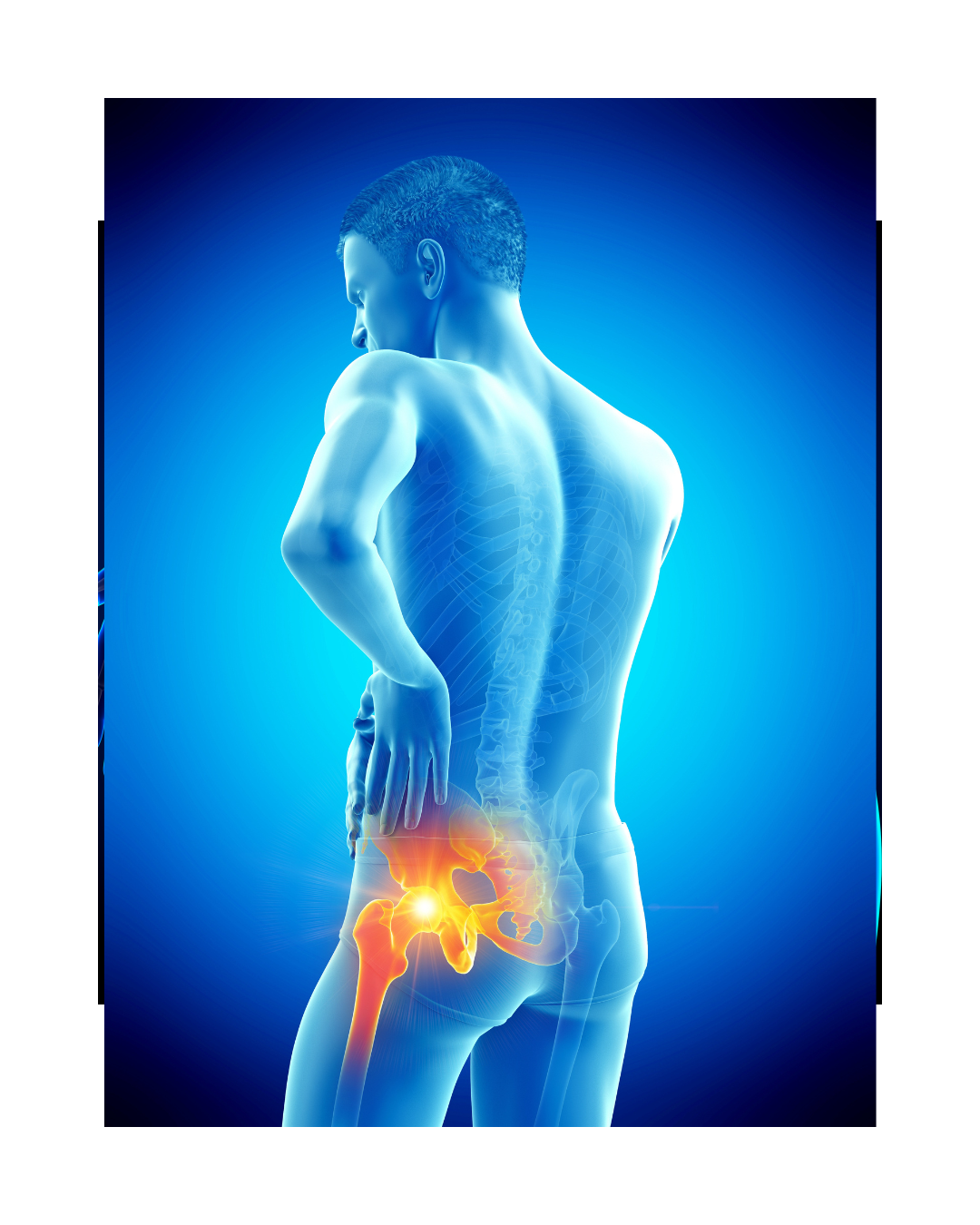
Femoroacetabular impingement (FAI)
Femoroacetabular impingement (FAI) is a structural condition of the hip that can cause pain and discomfort. In a normal hip joint, the ball-shaped head of the thigh bone (femur) glides smoothly within the socket of the pelvis (acetabulum). With FAI, there is an irregularity in either the shape of the ball or the socket aspect of the joint, resulting in friction and discomfort during specific movements.
3 types of femoroacetabular impingement
There are three main types of femoroacetabular impingement:
- Cam impingement – A formation of irregular shape at the head of femur causing it to rub against a regular pelvis socket.
- Pincer impingement – The acetabulum covers too much of the femural head, pinching the surrounding soft tissues.
- Combined mixed impingement– Occurs when an irregular head of femur is present with acetabulum over-coverage.
What causes FAI?
Several factors may contribute to the development of FAI, including:
- Growth – During adolescence, growth plates in your bones are still open, increasing the risk of developing FAI. This can happen especially with high-impact activities.
- Hip Conditions – There are hip disorders that specifically affect children that increase the risk of developing FAI, such as slipped capital femoral epiphysis (SCFE) and Legg-Calve-Perthes disease.
- Congenital/Born with it – As every bone structure is unique, you can be born with a hip shape that exposes you to FAI.
What are the symptoms of FAI?
FAI symptoms may vary from person to person. While some individuals may have no symptoms at all, others may experience the following.
• Hip pain – Most common areas include the groin, on the front or on the side of the hip. Activities such as squatting, running, and twisting may exacerbate that pain.
• Reduced hip range of movement – Due to the irregular shape of either the ball or the socket, the hip is unable to reach its full range.
• Clicking, catching or locking – Often caused by damage to the labrum of the hip.
How is FAI diagnosed?
Diagnosing femoroacetabular impingement (FAI) involves a clinical assessment, including a review of symptoms and a physical examination. A physiotherapist can often make a working diagnosis based on these findings.
Imaging may then be used to support the diagnosis. An X-ray is useful for identifying the bony structure of the hip. An MRI is considered the gold standard for assessing the labrum and cartilage.
How does physiotherapy help with FAI management?
Physiotherapy helps managing the pain from FAI, improving function, and supporting long-term hip health.
• Advice and education – Information regarding activity modification and pain relief.
• Strength and dexterity – Appropriate exercises for the hip to ensure strength and encourage good movement patterns.
Treatment outside of physiotherapy
Treatment options outside of physiotherapy may be considered depending on symptom severity and response to conservative management. Some options are:
• Hip arthroscopy – The shape of the irregular section of the joint can be altered and labral tissue can be repaired.
• Corticosteroid injection – Not recommended for initial treatment, can be effective with pain management in some cases.
Managing FAI with Hoppers Crossing Physiotherapists
Just because you have a confirmed case of FAI through imaging or a healthcare professional, it doesn’t necessarily mean you will have pain or dysfunction. Studies have shown that many people with FAI reported no symptoms. However, repeated impingement can cause damage to the labrum of the hip and wear down joint cartilage, which leads to an increased risk of hip osteoarthritis.
Remember, having FAI does not mean you will automatically develop hip osteoarthritis, it simply increases the risk.
If you are experiencing any symptoms of FAI, please contact us on (03) 9749 5110 or book online through our website.